

How to Name Your Core Values (Even If You Think You Already Have)
The Values Exercise I Almost Skipped
A few months ago, a coach friend of mine asked me to test a new values exercise he’d built. We were on a Zoom call. He had me sit down and work through his questions on my own, one at a time, then we talked through it together afterward so I could tell him how it landed.I almost didn’t take it seriously. I already knew my values. I’d known them for fifteen years.
I wrote my first set of core values in a leadership class in college. Three words: integrity, faithfulness, and passion. I didn’t agonize over them. I wrote them down, turned in the assignment, and moved on with my semester. But the words stuck. For years I filtered decisions through those three words. Should I take this job? Integrity. Should I stay committed to this relationship? Faithfulness. Should I chase this idea? Passion. I’d revisit them every year or so, half expecting they’d stop fitting eventually. They never did. Same three words, year after year, decade after decade.
So when my friend asked me to work through his questions, I figured I was there to help him test his framework, not to learn anything new about myself. Oh, how I was wrong!
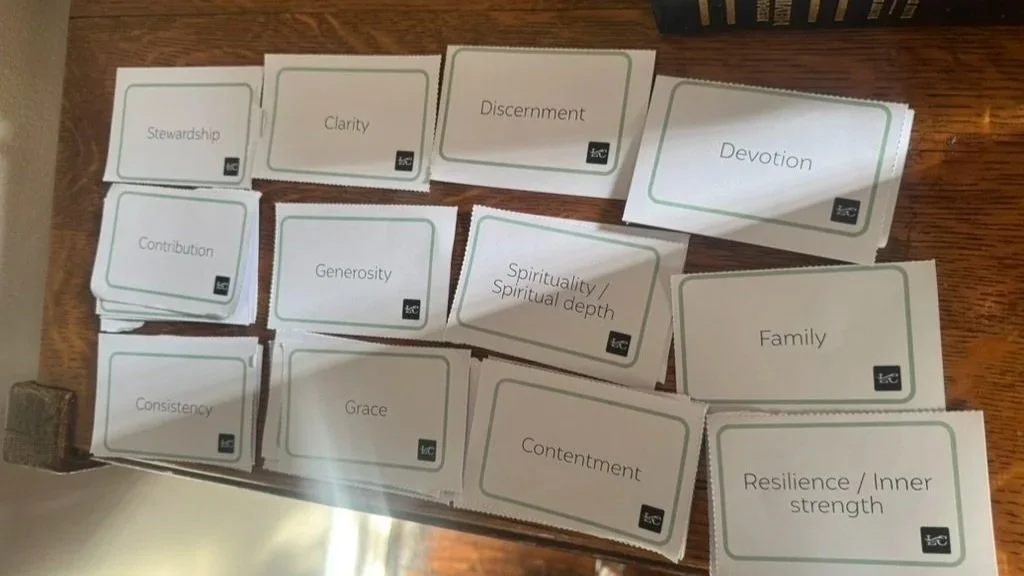
Working through his questions, something shifted. Not the words themselves. Integrity, faithfulness, and passion are still exactly what I mean when I say them. But somewhere between one husband, one baby, and one startup, what those words mean to me got sharper. They got more specific, more refined, more mine. I can still see the same three words I wrote in college. I’m just seeing them in a different light now, with a lot more life behind them. And then I added some to fit the life I’ve grown into. Values I hadn’t named so many years ago because I hadn’t lived the years that would produce them yet. After a little journaling and reflection, I had a revised list.
Here’s the thing I didn’t expect going into that exercise: the value of naming your core values isn’t really about landing on the perfect words. It’s about the process itself, done honestly, and done again when your life changes enough to warrant it. A few reasons this has mattered more than I expected:
It gives you a filter for decisions you haven’t made yet.
You don’t have to re-litigate every choice from scratch. When a decision lines up with your values, it gets easier to say yes. When it doesn’t, it gets easier to say no. I’ve used my three words as a gut check for job offers, hard conversations, and business decisions I wasn’t sure about.
It shows you when you’ve grown.
I didn’t log onto that call planning to change anything. But growth has a way of announcing itself once you slow down enough to notice. The exercise didn’t create the shift. It just gave me a place to see it.
It keeps you honest about who you truly are.
Real values are the ones you keep coming back to, whether or not anyone’s watching. Mine have survived fifteen years of decisions nobody else saw me make. That’s how I know they’re real.
It gives your team, your family, or your clients a shorthand for understanding you. People don’t have to guess what matters to you. You’ve already told them, plainly, in words you chose on purpose.
It’s a return on a small investment. The original exercise took me one afternoon in a college classroom. I’ve drawn on it for fifteen years. Few things pay off that consistently for that little upfront effort.
How to Actually Do This
If you’ve never written your own core values, or if it’s been years since you looked at the ones you have, here’s the version of the process that’s worked for me:
Start by asking what you keep coming back to. What you actually default to when a decision gets hard. That instinct is closer to a real value than anything you’d write to sound impressive.Write down more words than you need. You’ll narrow it later. My friend’s exercise had me naming far more than three, then cutting until only the ones that felt non-negotiable were left.
Test them against real decisions, past and future. Would this value have changed how you handled last year’s hardest call? Would it change how you handle the one coming up? If a value doesn’t hold up under a real decision, it’s probably still aspirational. It hasn’t earned its place yet.
Revisit them on a rhythm. I check mine every year or so. Most years, nothing changes. That’s fine. The rhythm isn’t about forcing change. Just about staying honest enough to notice when change has already happened.
It’s your turn.
Have you ever actually sat down and named your core values, on purpose, in your own words? The version that’s been steering your decisions all along, whether or not you’d ever written it down. If you haven’t, I’d start there before you start anywhere else. It’s a smaller exercise than it sounds like, and it pays off longer than almost anything else I’ve done for my own leadership.
PS: I put my full list of values below, if you want to see where a decade and a half and a few life changes landed me.
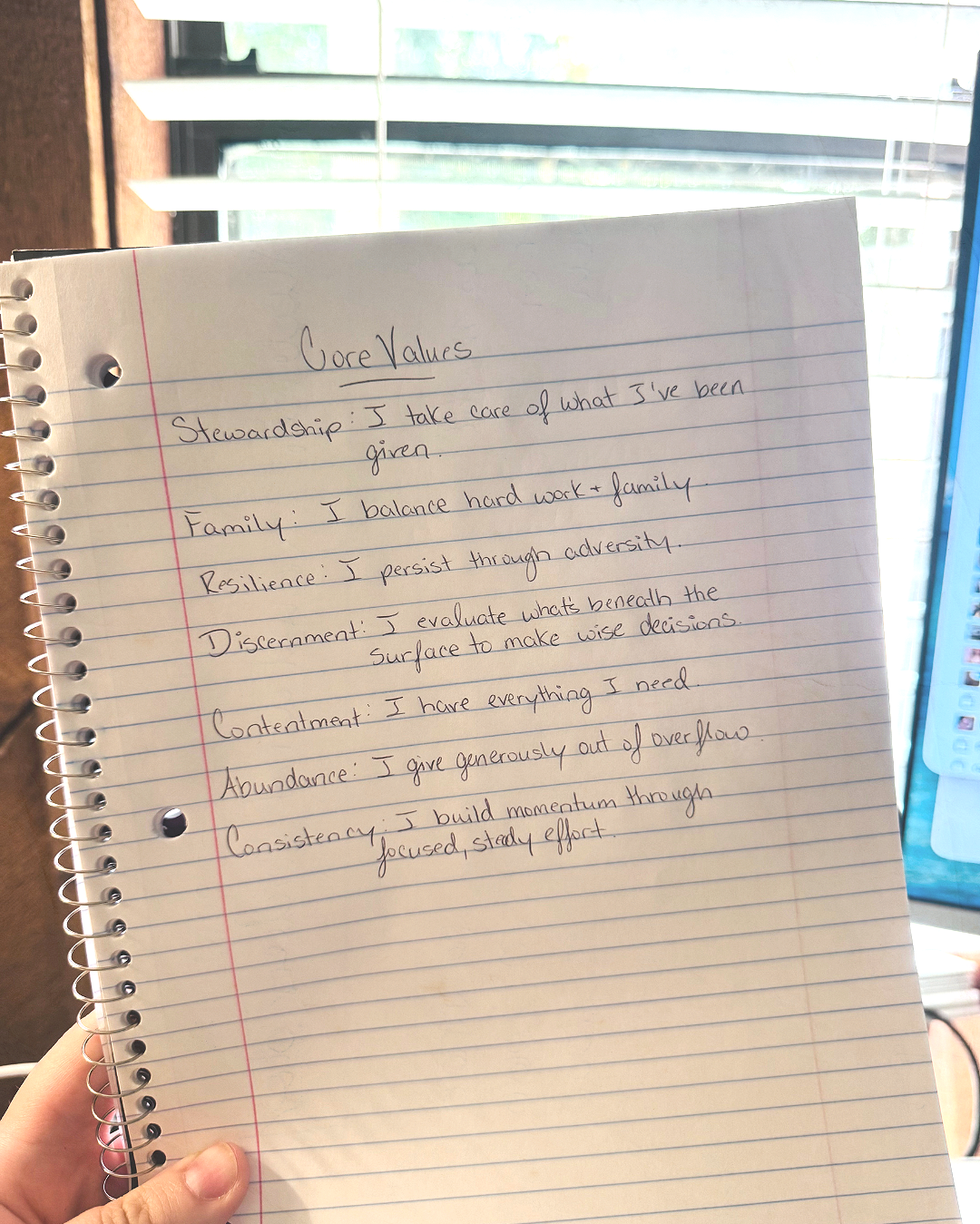
My Core Values:
Stewardship: I take care of what I've been given.
Family: I balance hard work and family.
Resilience: I persist through adversity.
Discernment: I evaluate what's beneath the surface to make wise decisions.
Contentment: I have everything I need.
Abundance: I give generously out of overflow.
Consistency: I build momentum through focused, steady effort.
